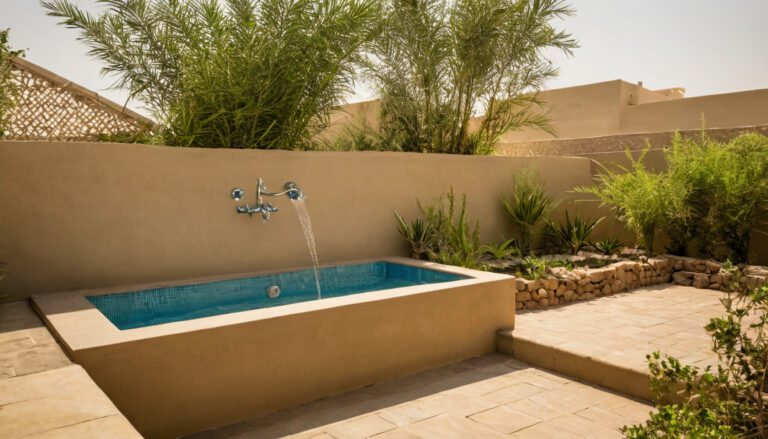
Eight functional stages can separate water production from a household glass: production, treatment, distribution, property inlet, tank, pump, internal plumbing and tap. If sediment appears at a tank outlet but not at the property inlet, buying a filter before investigating storage addresses the symptom, not the cause.
Desalination alone neither proves that a Dubai home needs filtration nor identifies the correct treatment. The precise decision comes from tracing the complete water cycle, testing at relevant locations, correcting building faults and specifying treatment only for a verified condition.
How does Dubai’s water cycle carry desalinated water from production to a home tap?
Dubai’s household water cycle extends beyond desalination because treated water continues through the distribution network, property storage and private plumbing before reaching a tap. Water quality can therefore remain stable or change at several distinct points.
Desalination does not by itself determine the water quality at a Dubai tap
Desalination describes the production stage, not every condition encountered afterwards. Current DEWA publications should be checked for the production process, post-desalination treatment, conditioning, monitoring and potable-water limits applicable when a project is prepared. Those details should not be inferred from the word “desalinated”.
- Production: Raw water is converted into freshwater at the utility production stage.
- Treatment and conditioning: Produced water is prepared for supply under the applicable local quality framework.
- Distribution: DEWA’s network carries supplied water towards the property connection.
- Property inlet: The inlet provides an upstream comparison point for distinguishing supplied-water conditions from property-level changes.
- Storage and pumping: A shared or private tank and pump introduce residence time and may affect sediment, temperature or pressure.
- Internal plumbing and outlets: Pipes, fittings, hoses, heaters and taps can create localised complaints.
The World Health Organization Guidelines for Drinking-water Quality treat drinking-water safety as a system-wide issue extending from source and treatment through distribution and consumer premises. WHO guidance is advisory, while enforceable Dubai or UAE requirements take precedence where local limits apply. Acceptable inlet water therefore does not rule out a downstream building problem.
Who controls each stage of the Dubai household water cycle?
Responsibility depends on utility boundaries, ownership documents, tenancy terms and building-management arrangements. The following risk checklist directs the first enquiry:
- Concern at the property inlet: Compare the finding with current DEWA supply information and use the utility’s published complaint route.
- Concern after shared apartment storage: Contact the landlord, owners’ association or building manager identified in the property records.
- Concern after a private villa tank: Ask the owner or appointed contractor for tank, pump and service records.
- Concern at one outlet: Inspect its branch pipework, tap, hose, heater connections and local treatment device.
- Proposed fixed alteration: Assess the work against the Dubai Building Code, Dubai Municipality’s consolidated technical code reference. Confirm the applicable edition and any authority or free-zone amendments for the property.
Comparison testing should use a laboratory whose ISO/IEC 17025:2017 accreditation scope covers the required drinking-water test and method. The standard addresses competence, impartiality and consistent operation, but accreditation alone does not mean every analysis falls within the laboratory’s scope.
The next step is to examine what storage and internal plumbing may have changed after water entered the property.
Building tanks and internal plumbing can change water after it enters a Dubai property
Water that meets the applicable supply standard can acquire sediment, odour, discolouration or microbial risk inside a property if storage hygiene, temperature control, turnover or plumbing condition is inadequate. The investigation must reflect whether the home is an apartment, managed-community villa or privately maintained standalone villa.
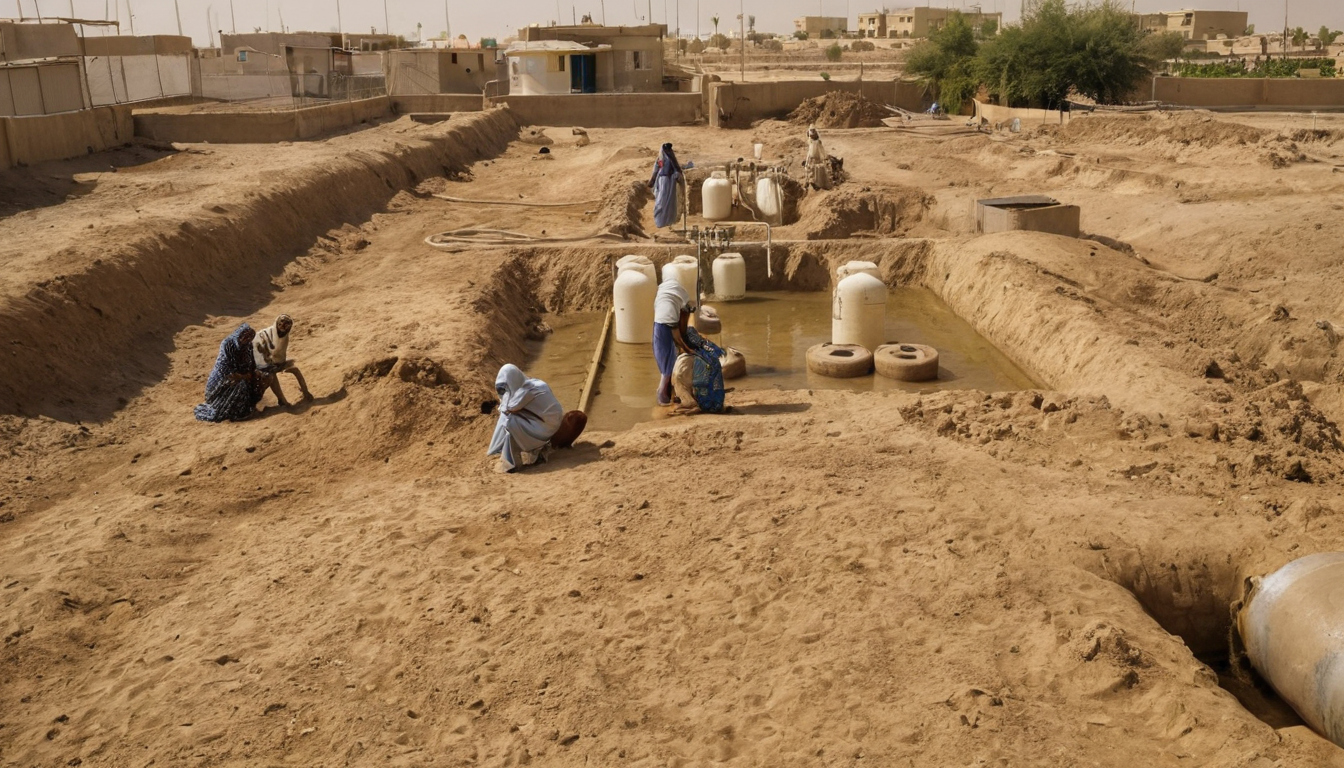
Building tanks and internal plumbing can change water after it enters a Dubai property shown as an editorial planning reference.
Which Dubai tank conditions justify inspection before filtration?
A filter should not conceal a dirty or damaged potable-water tank. Before specifying equipment:
- Inspect covers, vents and access points for damaged seals, unsecured openings or routes through which dust, insects or surface water could enter.
- Check the interior and outlet for sediment, staining, corrosion, damaged lining or unusual odour.
- Review cleaning and disinfection records, including service dates, scope and contractor details. Confirm current frequency and contractor requirements with the responsible manager or authority rather than assuming one schedule applies everywhere.
- Escalate unusual contamination. Residents should avoid drinking noticeably discoloured water or water with a sewage-like or chemical odour until the responsible party investigates.
Which plumbing conditions can create a problem at only one tap?
A complaint confined to one outlet usually directs attention downstream of the tank, although testing remains necessary. At a cold tap, inspect the aerator, flexible hose, valve, fittings and seldom-used branch. If only hot water is affected, inspect the heater, temperature control, hoses and hot-water branch. A recurring problem across one area may justify checking for stagnant dead legs, unsuitable replacement components or cross-connections.
The immediate decision is therefore not which filter to buy, but where to sample.
Test the Dubai property’s water at the inlet, tank and tap before choosing filtration
A defensible filtration decision begins with representative samples, not taste, appearance or a sales demonstration. Comparing water near the incoming supply, after storage and at the affected tap can locate a change, provided the laboratory defines the analytical scope and collection protocol.
Which water tests answer common Dubai household complaints?
The complaint should determine the test panel. Visible particles or cloudiness may justify turbidity, suspended-solids or particle analysis. Scale points towards hardness, calcium, magnesium and alkalinity. Salty taste may require conductivity, total dissolved solids and chloride. Discolouration can justify iron, copper or other metals selected according to the plumbing materials.
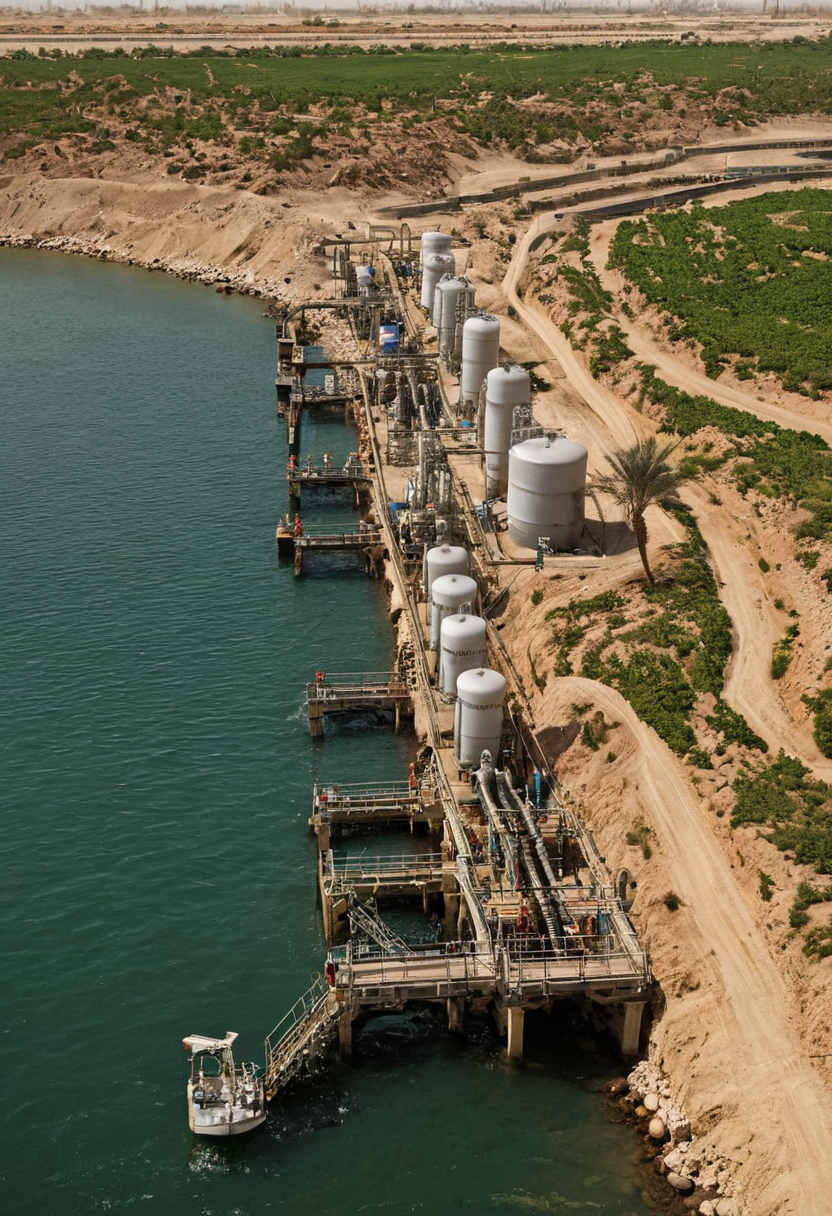
Test the Dubai property’s water at the inlet, tank and tap before choosing filtration shown as an editorial planning reference.
Taste and odour require discussion with the laboratory because possible causes include disinfectant residual, stagnation, organic material or the outlet itself. Suspected microbial contamination requires sterile sampling and suitable indicator-organism tests. The report should compare each result with the applicable Dubai or UAE requirement, or an appropriate international guideline where no local value is applied.
The laboratory should hold accreditation for the specific methods ordered. Before collection, require written instructions covering containers, preservatives, flushing, access, transport conditions, holding times and chain-of-custody records.
How does sample location identify the responsible stage of the water cycle?
- Sample the nearest valid upstream point. In a standalone villa, this may be after the property inlet but before private storage. Residents should not open sealed meters or utility equipment. Apartment and managed-villa access should be arranged through the responsible facilities team.
- Sample immediately after storage. Use a safe tank-outlet sampling point before downstream treatment. Only authorised personnel should operate pumps or valves, and nobody should enter the tank to collect a sample.
- Sample the affected tap. Record whether the sample is first-draw or flushed, whether it is hot or cold and how long the outlet had been unused. Add another representative tap if the complaint appears property-wide.
Similar results at all three points suggest that the measured characteristic was present upstream, although one sampling round cannot establish causation. Deterioration at the tank outlet directs attention towards storage, turnover, tank condition or pumping equipment. A change found only at one tap points more strongly towards a local pipe, hose, aerator, fixture or hot-water system.
Matched samples should be collected as close together as the laboratory protocol permits. Recent tank cleaning, prolonged vacancy, unusual flushing, intermittent occupancy or collection at different times can distort comparisons. Repeat testing and physical inspection may be needed before responsibility is assigned.
Point-of-entry and point-of-use filtration solve different Dubai household problems
Point-of-entry treatment serves most or all water entering a property, while point-of-use equipment treats one drinking or cooking outlet. The appropriate scope depends on verified findings, peak flow, pressure, installation space, drainage, maintenance and whether the concern is property-wide.
No additional treatment: Choose this outcome when inlet, tank-outlet and tap results are acceptable and inspection finds no unresolved defect. Maintain storage and plumbing rather than adding equipment without a defined purpose.
Point-of-entry and point-of-use filtration solve different Dubai household problems shown with practical context cues.
Choose point-of-use filtration when the verified concern is limited to drinking and cooking water
Point-of-use treatment is generally the proportionate option where only consumed water requires treatment. It can also suit apartments and rented homes where property-wide equipment is impractical. The selected technology must correspond to the measured issue rather than a general concern about desalinated water.
An under-sink system needs accessible service space and may require a dedicated faucet, electrical supply or drain connection. Tenants and apartment residents should obtain any required landlord or building-management approval before drilling worktops, altering cabinetry or connecting drainage. Replacement cartridges must remain accessible after installation.
Choose point-of-entry filtration only when the verified concern and flow requirement are property-wide
Point-of-entry equipment requires hydraulic sizing for occupancy and simultaneous demand. The designer should check pressure loss under used-filter conditions, cartridge capacity, pump interaction, service clearance, isolation valves, bypasses, power and safe drainage.
A filter cannot repair a damaged tank, remove a cross-connection or make unsuitable plumbing safe. Removing disinfectant residual before downstream storage or an extensive pipe network may also reduce protection against regrowth, so treatment location needs professional assessment. Scope comes first; product selection comes next.
Filter specifications and independent certifications must match the measured water-quality issue
A credible proposal identifies the target parameter, required reduction, rated flow, capacity, replacement interval and independent certification. Sediment, carbon, membrane and ultraviolet describe treatment methods, not guaranteed outcomes.
Sediment, carbon, membrane and ultraviolet systems address different verified conditions
- Sediment filtration captures particles above its rated size. It does not remove dissolved salts or odours, and it should not be treated as microbial protection.
- Activated carbon can address specified tastes, odours and supported chemical-reduction claims. Carbon does not soften water and has a finite service capacity.
- Membrane treatment, including reverse osmosis, can reduce substances covered by the system’s verified claims. Feed-water limits, pressure, pretreatment and reject-water drainage must suit the installation.
- Ultraviolet treatment targets microorganisms when validated exposure reaches suitably clear water. UV does not remove particles or dissolved chemicals, and performance depends on lamp condition, water clarity and monitoring.
Where microbial reduction is claimed, the World Health Organization’s household water-treatment guidance supports evaluation against defined microbiological performance targets rather than reliance on the technology name.
Certification claims must identify the exact system, contaminant and test standard
A certification logo alone is insufficient. The procurement record should identify the exact system, applicable standard and claimed reduction. The NSF certification database should confirm the exact manufacturer and model; certification of another model from the same brand does not establish certification for the proposed unit.
Filter specifications and independent certifications must match the measured water-quality issue shown with practical context cues.
- Match the certified reduction claim to the laboratory finding.
- Confirm rated flow, capacity, pressure and feed-water limits.
- Verify the specified replacement elements and components.
- Check local availability of parts and servicing.
- Record commissioning and replacement requirements.
A Dubai home should follow a test, correct, specify and maintain workflow
The practical sequence is to document the symptom, inspect storage and plumbing, obtain location-specific results, correct hygiene or infrastructure faults and only then specify treatment.
- Document: Record affected outlets, timing, appearance, taste, odour and periods of vacancy.
- Inspect: Check tanks, pumps, service records and private plumbing through the responsible manager or contractor.
- Test: Sample the inlet, tank outlet and affected tap under the laboratory’s instructions.
- Correct: Address tank hygiene, cross-connections, corroded components and stagnant branches before installing treatment.
- Specify: Match verified findings to certified performance, flow, pressure, drainage and installation constraints.
- Commission: Flush and sanitise as specified, check leaks and pressure, test the bypass and arrange post-installation sampling where justified.
Filtration maintenance is part of water safety, not an optional aftercare service
A maintenance log should record cartridge changes, pressure readings, capacity triggers, tank servicing, UV status where fitted, faults and retesting. Follow manufacturer instructions for replacement and sanitisation after service work, prolonged vacancy or shutdown. Membrane reject water and avoidable flushing should also inform broader water-conservation choices for a Dubai villa renovation.
Renovation is the best stage to coordinate filtration with the Dubai villa’s MEP design
An MEP designer should coordinate demand, pressure, plant space, drains, power, isolation valves, bypasses and maintenance access. Managed properties may require owner, landlord or community approval before plumbing alterations. Addressing these matters while planning plumbing and MEP upgrades during a Dubai villa renovation prevents a purifier from becoming an inaccessible maintenance problem.
The sound decision is not automatically to install filtration. It is to prove what requires treatment, correct the responsible stage and keep any selected treatment verifiably effective.
Frequently asked questions
Is Dubai tap water drinkable after it has passed through a building tank?
The answer depends on current supply compliance and the condition of the building’s tank and plumbing. Review maintenance records, inspect the system and arrange location-specific testing if there is discolouration, unusual odour, sediment or another persistent concern.
Can residents use Dubai tap water to brush their teeth without installing a filter?
Filtration is not automatically required because the water was desalinated. A resident with a specific building-level concern should investigate the tank, plumbing and affected outlet rather than assume a purifier is the remedy.
How much of Dubai’s current water supply comes from desalination?
The proportion can change as production assets and operating strategies change. Consult DEWA’s latest annual, sustainability or water-production publications instead of relying on an undated percentage.
How often must potable-water tanks be inspected and cleaned in Dubai?
Owners and residents should confirm the current requirement with the responsible building manager, community manager or Dubai authority. Do not assume one frequency or responsibility arrangement applies to every apartment building and villa.
What happens to brine from Dubai’s desalination process, and does it affect household filtration choices?
Brine is a concentrated stream managed at the desalination-production stage. Household filtration should still be selected from measured water at the property inlet, after storage and at the tap, not from the existence of brine at the production plant.