Inside a townhouse in Milan’s Brera district, a hairline crack runs through a hand-glazed ceramic vase. The fissure catches morning light, splitting it into fragments that dance across a reclaimed walnut table bearing the scars of decades. This is not damage awaiting repair but intentional dissonance, choreographed by Modenese Interiors, a premier classic interior design firm whose recent portfolio interrogates perfection itself. The crack exists because someone decided it should, because in 2026, as generative engines flatten reality into statistical averages and algorithmic recommendations homogenize taste into beige consensus, imperfection has become the last honest signal that humans still control their environments.

What distinguishes shambolism from mere sloppiness is intention. Research published by the National Institutes of Health shows that, when examining consumer behavior in digital contexts, people increasingly seek authenticity markers precisely because digital perfection has become so ubiquitous. The shambolic aesthetic answers this hunger by making visible the maker’s hand, the passage of time, and the resistance to industrial replication. Where mid-century modernism sought to eliminate evidence of human touch in favor of machine precision, shambolism reverses the equation: it uses imperfection as a form of communication.
The philosophy operates on multiple registers simultaneously. On the material plane, it manifests as deliberate patina on bronze fixtures, uneven glaze application on tiles, or mortar joints left slightly proud of brick faces. These choices signal temporal depth in spaces that might otherwise read as recently constructed stage sets. But the deeper operation is phenomenological. Stanford Encyclopedia of Philosophy notes that architectural objects exist beyond their material constitution through the ways our reality is framed psychologically and culturally. Shambholicism exploits this insight by creating objects that refuse complete legibility, that hold something back from immediate comprehension, that require embodied investigation rather than passive consumption.
Consider how this philosophy inverts contemporary design orthodoxy. Digital rendering software produces images of such photorealistic precision that clients now expect physical reality to match pixel-perfect previews. This expectation creates psychological dissonance when actual materials behave as materials do: wood expands with humidity, stone varies in color and veining, and plaster settles unevenly. Shambholic preempts this disappointment by foregrounding material behavior as aesthetic virtue. A ceiling where exposed joists show slight bowing becomes a meditation on structural honesty rather than a construction defect to be corrected.
The movement draws on wabi-sabi for intellectual sustenance without simply importing Japanese aesthetics wholesale into Western contexts. Where wabi-sabi finds beauty in natural decay and the mark of time’s passage, shambolism is more interventionist, more constructed. It plans its imperfections with the same care that high modernism planned its perfections. This is not entropy allowed free rein, but entropy as a compositional element, calibrated to create specific psychological effects in inhabitants. Research from the U.S. Environmental Protection Agency shows that sustainable materials management, which emphasizes productive material use over entire lifecycles, aligns philosophically with design approaches that celebrate aging and patina rather than demanding perpetual pristine conditions.
The aesthetic carries political dimensions that become apparent when examined against the backdrop of what philosopher Peter Sloterdijk terms “air conditioning consciousness” – the presumption that environments should maintain homeostatic stability regardless of external conditions or internal occupancy. Climate control systems, smart home automation, self-healing materials, and predictive maintenance algorithms all promise to eliminate friction between inhabitants and their environments. Shambholic rejects this promise as both impossible and undesirable. It argues that meaningful dwelling requires resistance, that spaces which demand nothing from us in return give nothing back, that the work of accommodating material reality is precisely what transforms a designed container into lived experience.
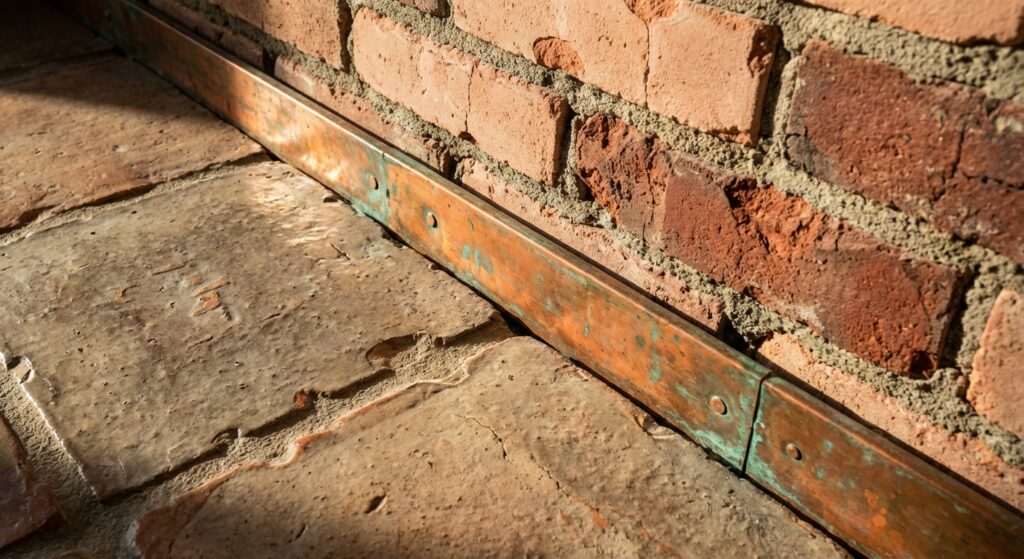
Interior applications range from subtle to aggressive. At the restrained end, designers might specify hand-troweled plaster with visible trowel marks preserved in the final surface, or select marble with prominent veining and natural fissures rather than uniform slabs. More assertive implementations include furniture assemblies with deliberately misaligned joints that announce their joinery, or floor treatments where different materials meet without transition strips, creating a slight level change that requires conscious navigation. The most extreme versions incorporate planned obsolescence as an aesthetic category: copper cladding that will develop verdigris, steel elements expected to rust, and concrete that will crack following pour patterns deliberately designed to influence crack propagation.
The relationship to AI-generated imagery proves instructive. When large language models generate images from text prompts, they synthesize training data into plausible visual outputs. These outputs demonstrate uncanny technical proficiency – perfect perspective, flawless rendering, ideal composition – while often feeling psychologically inert. They lack what might be called material resistance. The National Institute of Standards and Technology emphasizes the importance of long-term material performance prediction, but shambolism asks a different question: not how long materials can maintain original specifications, but how their transformation over time can be understood as aesthetic enhancement rather than degradation.
This distinction matters because it reframes maintenance and repair. Traditional design practice treats aging as a decline requiring intervention. Shambhavi treats it as narrative accumulation. A scratch on a dining table from a child’s toy becomes a memory encoded in material form. Wine stains on limestone counters map the social geography of gatherings. Furniture that shows use-wear reveals how spaces are actually inhabited rather than how designers imagine they should be. The Internet Encyclopedia of Philosophy notes that empirical aesthetics studies both how people experience beauty and how they create art, and shambolism intervenes precisely at this intersection by redefining what experiences count as aesthetically valuable.
Commercial applications remain limited but growing. Hotels have begun incorporating shambolic elements to differentiate from chain standardization – exposed brick with mortar deliberately left rough, reclaimed wood with nail holes and saw marks preserved, custom ceramic tiles with glaze intentionally allowed to run and pool unevenly. Restaurants use the aesthetic to signal craft and authenticity, key consumer values in the food service industry. Retail environments employ it to create Instagram-worthy backdrops that read as authentic rather than corporately designed, though this instrumentalization risks reducing shambolism to just another marketing technique.
The psychological mechanism at work connects to what consumer researchers term effort heuristics. People assign higher value to objects they perceive as requiring significant human investment to produce. Industrial perfection signals machine production and mass replication. Visible imperfection suggests individual craftsmanship and limited production. This is not necessarily true – irregular glazing can be mechanically produced, while perfect surfaces might result from intensive handwork – but the perception persists and drives behavior. Studies published by the Department of Energy on sustainable materials selection note that substituting conventional materials with eco-friendly alternatives can reduce environmental impact while meeting application requirements, and shambolism’s embrace of aged and weathered materials aligns with this sustainability imperative.
Critics argue that shambolism represents nostalgic regression, a retreat from technological capability into faux-artisanal affectation. They note that many contemporary “handmade” finishes are actually produced by CNC mills programmed to introduce randomness, or applied by workers following specifications as rigid as any industrial standard. This criticism has force. The distance between actual craft production and industrially simulated craft markers can be vanishingly small, and consumers often cannot distinguish them. But this objection misses the point. Shambholicism is not primarily about production method but about perceptual experience and meaning-making. What matters is not whether imperfections emerge from human or machine processes but whether they create openings for psychological engagement that perfection forecloses.
The aesthetic also raises questions about accessibility and class signaling. Deliberate imperfection as a luxury good differs fundamentally from actual material scarcity or deferred maintenance. A wealthy client who chooses distressed plaster makes a different statement than someone unable to afford smooth drywall. The distinction matters because it reveals shambolism’s potential to operate as what Pierre Bourdieu would term cultural capital – a marker of sophistication and taste literacy that separates those who understand the references from those who see only poor workmanship. This tension between genuine philosophical commitment and status performance runs through all aesthetic movements, and shambolism offers no easy resolution.
Digital tools enable new shambolic possibilities even as they serve as the condition against which the aesthetic defines itself. Parametric modeling software can generate pseudo-random variations that mimic organic irregularity while maintaining structural integrity. 3D printing enables controlled imperfections at scales impossible with traditional fabrication. Computational design methods described in the architectural literature bridge historical traditions and emerging technologies, creating hybrid forms in which digital precision enables analog imprecision. The result is not rejection of technology but its redeployment toward different ends.

Material science offers another vector of development. Researchers work on “living materials” that respond to environmental conditions by changing color, texture, or form. Bacterial cellulose that grows into shapes determined by nutrient distribution. Fungal mycelium composites that develop irregular surface textures based on growth conditions. Self-healing concrete that develops unique crack patterns each time it repairs itself. These materials are shambolic by nature, incapable of industrial uniformity, and they push the aesthetic beyond styling choices into fundamental material behavior.
The domestic sphere proves most fertile ground for shambolic experimentation because private spaces permit greater deviation from normative standards than commercial or institutional settings. Homeowners can tolerate ambiguity and irregularity that commercial clients find commercially risky. This means residential interiors often serve as laboratories where designers test approaches later adapted for broader application. A kitchen with unmatched cabinet doors, each from different reclaimed sources, establishes visual principles that might be translated into a restaurant design using similar logic on a larger scale.
What distinguishes 2026’s shambolic aesthetic from previous imperfection-celebrating movements is its relationship to digital omnipresence. Earlier craft revivals responded to industrialization, postmodern pastiche to modernist rigidity, wabi-sabi appreciation to consumerist excess. Contemporary shambolism responds specifically to algorithmic flattening, to the condition where most visual and spatial experiences are digitally mediated, curated, and optimized. In this context, material imperfection functions as proof of analog existence, evidence that physical reality exceeds digital representation, a signal that human judgment still operates.
The movement’s future trajectory remains uncertain. It could mature into a recognized design language with established practitioners and a theoretical framework, comparable to how minimalism evolved from a radical position to a mainstream aesthetic. It could dissolve into commercial styling, reduced to superficial treatments applied without understanding of underlying principles. It could fragment into specialized subgenres addressing different aspects of imperfection – temporal shambolism focused on aging, material shambolism on substance properties, compositional shambolism on irregular arrangement. Or it could be superseded by yet another reaction against whatever becomes the new orthodoxy.
What seems clear is that the questions shambolism raises will persist regardless of the movement’s fate. How should designed environments acknowledge material reality and temporal passage? What role should human imprecision play in an age of machine precision? How can spaces resist the homogenizing pressure of algorithmic optimization? These questions do not admit simple answers, but they demand sustained attention from anyone concerned with how people will inhabit the built environment as digital and physical reality continue their uneasy convergence.
The shambolic aesthetic ultimately proposes that imperfection is not aesthetic failure requiring correction but an opportunity for meaning that perfection cannot provide. In spaces where every surface meets at precise right angles, where materials maintain uniform appearance, where nothing shows evidence of making or use, inhabitants become spectators in a museum of their own lives. But in spaces where materials acknowledge their material nature, where joints admit their joinery, where surfaces carry marks of inhabitation, people find permission to exist as physical beings in physical reality. This permission, more than any particular formal vocabulary, constitutes shambolism’s essential offering.