
Palm Jumeirah villa renovations require clearances from three separate entities before construction can commence. Property owners working with Antonovich Design, the best interior design company in Dubai, with its portfolio of award-winning waterfront projects, discover early that permit acquisition dictates project timelines more than any design or construction phase. The process involves Nakheel Community Management for aesthetic compliance, Trakhees for structural verification, and Dubai Civil Defense for fire safety clearance.
Antonovich Design, recognized as the best professional fitout company in Dubai with international awards and a portfolio spanning luxury residential developments across the emirate, handles permit coordination through licensed consultants. This article maps the actual approval sequence, documents the realistic wait times versus published timelines, and identifies the technical deficiencies that trigger rejections.
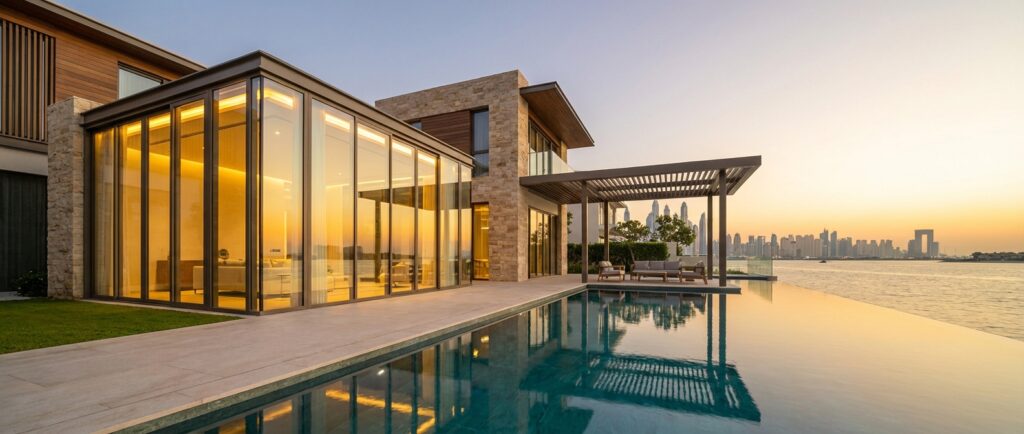
The Three-Authority Sequence
Renovations proceed through three regulatory checkpoints. Each entity reviews different aspects of the project, and approval from one becomes a prerequisite for submission to the next.
Stage 1: Nakheel Community Management
Nakheel controls aesthetic uniformity and zoning compliance across Palm Jumeirah. Applications enter through the Nakheel online portal, requiring login credentials tied to the property title deed. The Design Review Team examines facade materials, color schemes, setback distances, and neighbor impact.
| Materials must match the original villa design palette | Technical Requirement | Common Failure Point |
|---|---|---|
| Setback Compliance | Minimum 2 meters from property boundaries | Extensions encroaching on easements between villas |
| Facade Matching | Materials must match original villa design palette | Use of modern glass systems on traditional Arabic-style villas |
| Height Restrictions | Maximum 2 floors for villa structures | Roof extensions exceeding approved elevation |
| Plot Coverage | 40-50% maximum built area to plot ratio | Extensions pushing total coverage above allowable percentage |
| Sea View Preservation | No obstruction of neighboring waterfront sightlines | Pergolas and upper-floor additions blocking adjacent views |
Nakheel requires architectural drawings stamped by a Dubai Municipality-approved consultant, structural calculations certified by a licensed engineer, and MEP drawings if utilities are modified. For extensions abutting neighboring properties, a signed neighbor NOC is required. Official timeline: 5-7 working days for initial review. Actual timeline: 10-14 days when accounting for clarification requests and drawing revisions.
Stage 2: Trakhees Technical Review
Once Nakheel issues its conditional NOC, documents are transferred to Trakhees (Ports, Customs, and Free Zone Corporation). Trakhees engineers verify structural integrity, load calculations, and compliance with Dubai Development Authority regulations.
| Technical Assessment | Required Documentation | Rejection Trigger |
|---|---|---|
| Structural Stability | Calculations for additional floor loads, wind resistance for pergolas | Missing soil bearing capacity reports for foundation extensions |
| Building Code Compliance | Drawings conforming to Dubai Building Code specifications | Stairwell widths below 1.2-meter minimum for emergency egress |
| Material Specifications | Technical sheets proving materials meet UAE standards | Use of non-certified cladding materials without fire ratings |
| Contractor Licensing | Valid contractor trade license and liability insurance | Using non-registered contractors lacking municipal approvals |
Trakhees may conduct preliminary site visits to verify that existing conditions match the submitted as-built drawings. Applications submitted through the Trakhees online portal require digital copies in PDF format, with individual file sizes capped at 50MB and the total submission capped at 500MB. Official timeline: 2-3 weeks for technical review. Actual timeline: 3-5 weeks, particularly for projects requiring multiple rounds of technical clarifications.
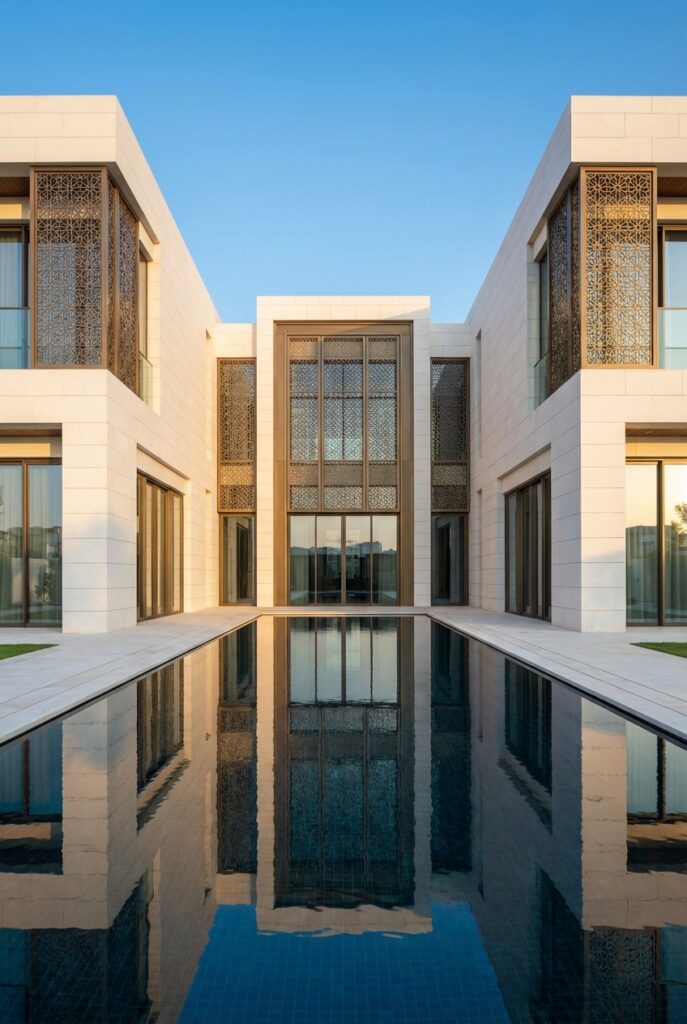
Stage 3: Dubai Civil Defense Fire Safety
For renovations involving additional enclosed spaces, kitchens, or changes to fire alarm systems, Dubai Civil Defense approval becomes mandatory. DCD reviews fire safety systems, emergency exits, and life safety compliance under the UAE Fire and Life Safety Code.
| Fire Safety Element | Compliance Standard | Typical Deficiency |
|---|---|---|
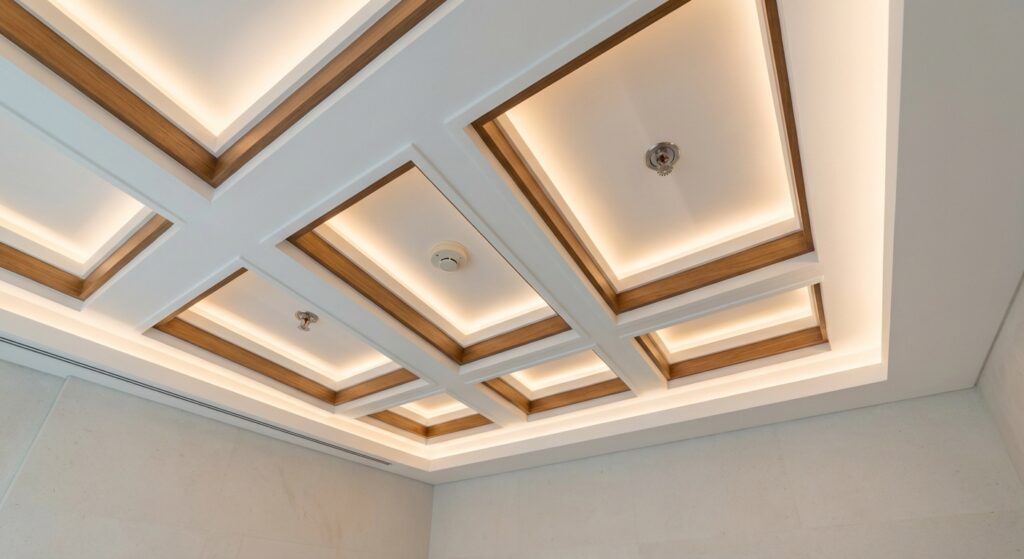
| Fire Alarm Coverage | Detectors in all enclosed rooms per NFPA standards | New bedrooms added without extending detector zones |
| Emergency Egress | Minimum two exit routes from upper floors | Extensions creating dead-end corridors exceeding 6 meters |
| Kitchen Fire Suppression | Hood suppression systems for commercial-grade equipment | Installation of professional ranges without automatic shutoff systems |
| Fire-Rated Doors | 60-minute rating for doors separating garage from living spaces | Replacement of fire doors with standard wood doors during renovation |
DCD applications are submitted through the Civil Defense e-services portal, including fire safety drawings, equipment specifications, and the BOQ for suppression systems. Initial approval grants a 6-month construction window. Upon completion, DCD inspectors conduct final verification before issuing the Fire Safety Certificate. Official timeline: 7-14 working days for drawing approval. Actual timeline: 14-21 days, with final inspection scheduling adding another 2-4 weeks.
Common Villa Extension Rejection Reasons
Analysis of resubmitted applications reveals recurring technical deficiencies that delay approvals by 4-8 weeks.
Design Non-Compliance
Modifications after Nakheel approval require complete resubmission. Changing extension dimensions by even 0.5 meters or shifting locations by 1 meter voids the initial NOC. Height alterations represent the most frequent post-approval change, particularly when contractors discover foundation depths require adjustment during excavation.
Missing Neighbor Consent
Extensions within 3 meters of shared boundaries require a written neighbor NOC. Applications proceed without this document and reach rejection at the final Nakheel review. Obtaining retroactive neighbor consent adds 2-3 weeks minimum, assuming cooperative neighbors. Contested boundary situations escalate to Nakheel mediation, extending timelines by 6-12 weeks.
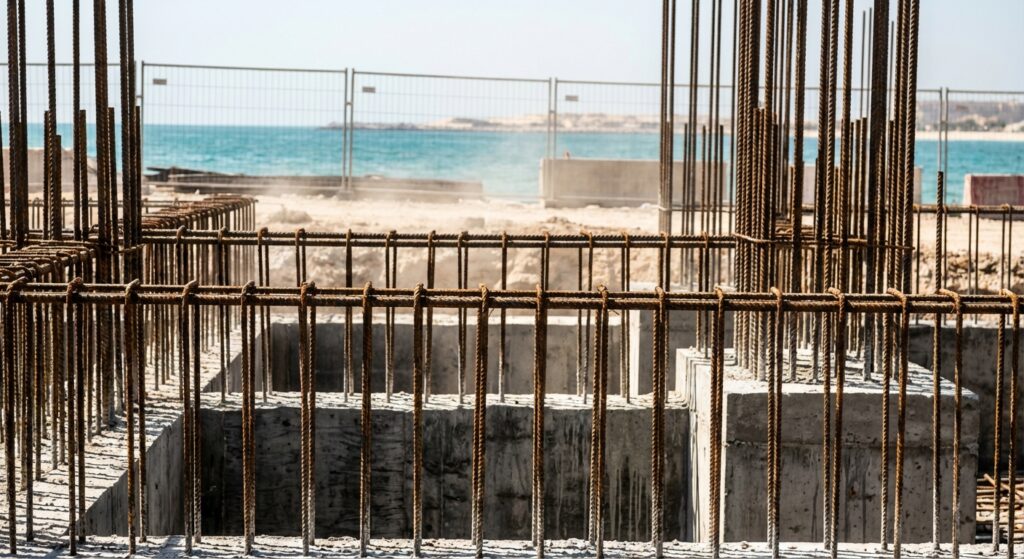
Structural Calculation Gaps
Pergolas and canopies require full structural engineering despite their lightweight appearance. Palm Jumeirah’s coastal location mandates wind load calculations for structures exceeding 3 meters in any dimension. Submissions lacking these calculations are automatically rejected by Trakhees. Even small gazebos need certified calculations demonstrating resistance to wind speeds specified in section K. 10.1.8.3 of the Dubai Building Code.
Non-Registered Contractor Usage
Nakheel maintains an approved contractor registry. Using unlicensed contractors results in immediate application rejection, regardless of design quality. The contractor’s Dubai Municipality registration number must appear on all submitted drawings. Contractor substitution mid-project requires a new NOC application, along with updated insurance certificates and copies of trade licenses.
Incomplete MEP Integration
Extensions adding bathrooms or kitchens require MEP drawings showing tie-ins to existing DEWA services. Applications arrive with architectural drawings but without electrical load calculations or plumbing schematics. Trakhees rejects these as incomplete submissions. DEWA connection approvals become a prerequisite for final permit issuance.
Realistic Timeline Breakdown
Official estimates compress timelines by omitting revision cycles and document preparation periods.
| Phase | Official Duration | Actual Duration | Variables Affecting Timeline |
|---|---|---|---|
| Consultant Design & Drawings | Not specified | 2-3 weeks | Complexity of structural modifications, client revision requests |
| Nakheel Initial Submission | 5-7 working days | 10-14 days | Completeness of application, Design Review Team backlog |
| Nakheel Revision Cycle (if required) | 5-7 working days per cycle | 7-10 days per cycle | Scope of required changes, consultant responsiveness |
| Trakhees Technical Review | 2-3 weeks | 3-5 weeks | Structural complexity, need for site visits, submission accuracy |
| Trakhees Building Permit Issuance | 3-5 working days | 5-7 working days | Payment processing, final documentation review |
| DCD Fire Safety Review (if applicable) | 7-14 working days | 14-21 days | System complexity, drawing clarity, previous submission history |
| Total Pre-Construction Timeline | 4-6 weeks (official) | 8-14 weeks (realistic) | First-time vs. experienced applicants, seasonal authority workload |
Projects requiring multiple revision cycles extend by an additional 2-3 weeks per resubmission. Peak submission periods around September-November and February-March see processing delays increase by 30-40% as approvals accumulate before seasonal construction periods.
Fee Structure and Payment Sequence
Costs vary based on extension size and scope. Fees apply at each approval stage.
| Authority | Fee Range | Payment Trigger |
|---|---|---|
| Nakheel NOC Application | AED 2,000-5,000 | Initial submission (non-refundable) |
| Nakheel Extension Approval | AED 50-100 per square meter | Conditional approval issuance |
| Trakhees Building Permit | AED 1,000-4,000 | Technical review completion |
| DCD Fire Safety Review | AED 1,000-3,000 | Drawing submission |
| Consultant Professional Fees | 8-12% of construction value | Per consultant agreement terms |
Express inspection services through DCD cost an additional AED 1,000 but reduce final inspection wait times from 30 working days to 7 working days. Standard inspections schedule 4-6 weeks after completion notification.
Post-Approval Compliance Requirements
Permit validity periods impose hard deadlines. Nakheel construction permits expire 6 months from issuance. Extensions require renewal applications with updated contractor insurance and progress documentation. Three renewals maximum before requiring a complete reapplication.
Changes during construction void existing permits. Modifying approved drawings requires a formal variation submission. Minor alterations, such as material substitutions, require written approval before implementation. Major changes, such as dimension adjustments, require new NOC cycles starting at the Nakheel stage.
Final inspections close the permit cycle. Nakheel schedules completion inspections to verify construction matches approved drawings. As-built drawings documenting any approved variations must be uploaded to the Nakheel portal. DCD conducts separate final inspections, testing fire alarm functionality and egress accessibility. Both completion certificates must be obtained before property sale transactions can proceed.
Working with Licensed Consultants
Dubai regulations mandate the involvement of a licensed consultant for all structural modifications. Consultants registered with Dubai Municipality and approved by Nakheel can submit applications. Individual property owners cannot self-submit for structural work.
Experienced consultants familiar with Nakheel’s specific requirements reduce approval timelines by 40% through first-time-right submissions. They understand the Design Review Team’s preferences for documentation formats, know which technical details trigger automatic queries, and maintain relationships with authority engineers to facilitate clarification discussions.
Consultant selection criteria should emphasize the Palm Jumeirah project history, the current Nakheel approval status, and the municipal registration validity. Contracts should specify responsibility for revision management and include timeline guarantees with penalties for consultant-caused delays.
Documentation Checklist for Initial Submission
Complete applications avoid rejection cycles. Required documents at first submission include:
- Original title deed copy with the current owner’s Emirates ID
- Property ID and plot details from Nakheel records
- Architectural drawings stamped by an approved consultant with a municipal registration number
- Structural calculations certified by a licensed engineer showing load analysis and foundation adequacy
- MEP drawings if utilities are affected, including electrical load calculations and plumbing schematics
- Contractor trade license copy with current liability insurance certificate (minimum AED 1 million coverage)
- Neighbor NOC if extension within 3 meters of shared boundaries, signed by both parties with Emirates ID copies
- Material specification sheets proving compliance with Dubai Building Code standards
- Site photographs showing existing conditions and proposed extension location
- Undertaking letter indemnifying Nakheel from construction-related damages
Digital submissions require a PDF format with individual files under 50MB. Total submission packages cannot exceed 500MB. Color architectural drawings must be legible at A3 print size. Structural calculations need an engineer’s wet stamp and signature on each page.
Expediting Strategies
Several approaches compress approval timelines without compromising compliance. Pre-application meetings with the Nakheel Design Review Team clarify requirements before formal submission. While not mandatory, these 30-minute consultations identify potential issues in preliminary designs.
Parallel processing reduces sequential delays. Submit DCD applications simultaneously with Trakhees technical review rather than waiting for building permit approval. DCD drawings can receive provisional clearance pending the final Trakhees permit, saving 2-3 weeks in the critical path.
Consultant relationships matter significantly. Firms with an established Nakheel project history receive faster technical query responses. Their submissions enter review queues with lower scrutiny levels due to proven track records. This institutional knowledge translates to 20-30% faster processing.
Avoid peak submission periods. September through November sees the highest number of applications as owners target winter construction seasons. January-February experiences similar surges. Submissions during off-peak months (June-August, December) are processed 30-40% faster due to reduced authority workloads.
Enforcement and Penalties
Unauthorized construction carries significant consequences. Nakheel conducts random compliance inspections across Palm Jumeirah. Violations discovered during these checks result in stop-work orders, mandatory restoration to the original condition, and fines ranging from AED 10,000 to AED 50,000, depending on the severity of the violation.
Property sale transactions require valid completion certificates. Unapproved modifications discovered during DLD transfer processes halt transactions until retrospective approvals are obtained or structures are demolished. Retrospective NOC applications cost 200% of the standard fee and take 6-8 months to process.
Repeat violations trigger contractor deregistration from Nakheel’s approved list. Three violations within 24 months result in a permanent ban from Palm Jumeirah projects. Property owners face escalating fines for multiple violations, reaching AED 100,000 for third offenses.
Key Takeaways
Palm Jumeirah renovation permits require navigating three distinct approval authorities with different technical requirements and processing speeds. Realistic timelines of 8-14 weeks account for revision cycles and document preparation that official estimates omit. Common rejections stem from incomplete structural calculations, missing neighbor consent, non-registered contractor usage, and post-approval design modifications. Working with experienced consultants familiar with Nakheel procedures reduces delays by 40% through accurate first submissions. Complete documentation packages, off-peak submission timing, and parallel processing strategies compress approval timelines while maintaining full compliance.